Tubes and Transistors
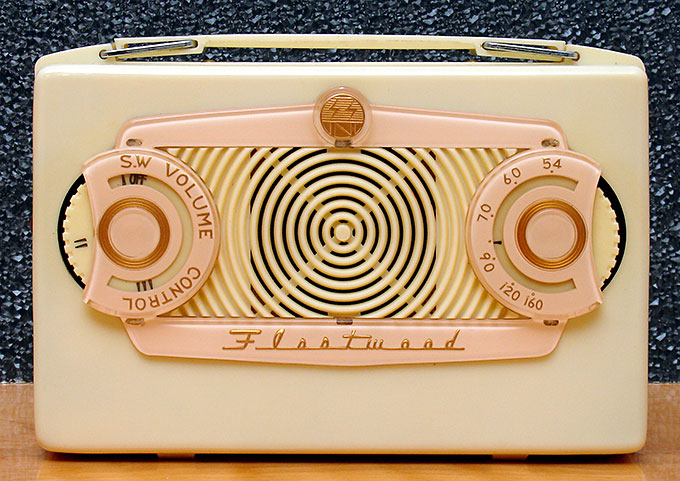
Before the transistor, electronics devices had vacuum tubes. The Fleetwood NR-260 (above), measuring 8 inches across, is a mid-late 1950s example of one of the last tube radios, made in Japan during the early transistor era. Note the luscious “underpainted” plastic trim around the knobs and logos.
As you see, the transistor did not sweep away tube devices immediately. Many companies were heavily invested in their tube-making facilities. And, in fact, tubes are still with us today: Tube hi-fi is still valued for its warm sound and tube guitar amps are still valued for their ability to distort in a pleasing manner at high volumes, as opposed to transistor amps which just shriek.
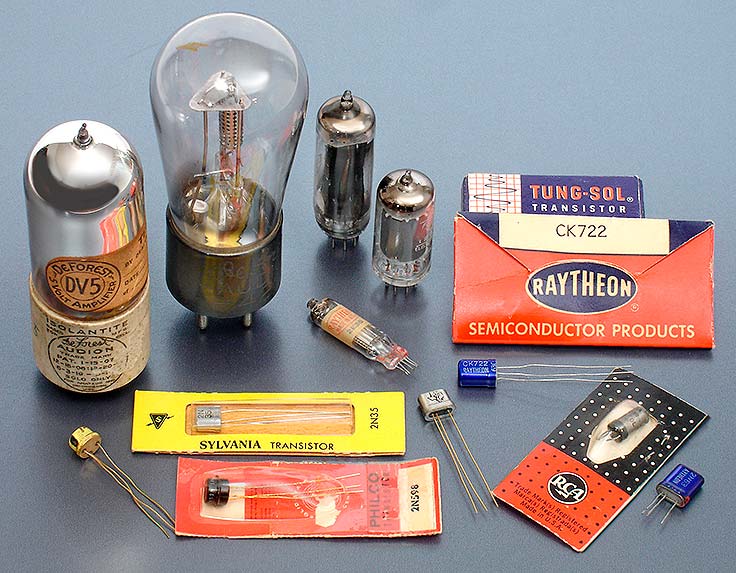
Sometimes collections just happen to you. Though I didn’t set out to collect vintage electronics parts, with all of my fooling around with radios it just sort of happened. I thought readers unfamiliar with these technologies might find it interesting to see just exactly what tubes and transistors actually look like and to see them side by side.
Upper left are two DeForest Audion tubes, the DV5 c.1920 and the model 427 c.1930. Next to them the smaller “peanut” tubes typical of what would be in the Fleetwood radio at top. Next is packaging for Tung-Sol and Raytheon transistors. The two blue gizmos are indeed Raytheon transistors. Other transistors by Sylvania, Philco, and RCA are shown in their packages.
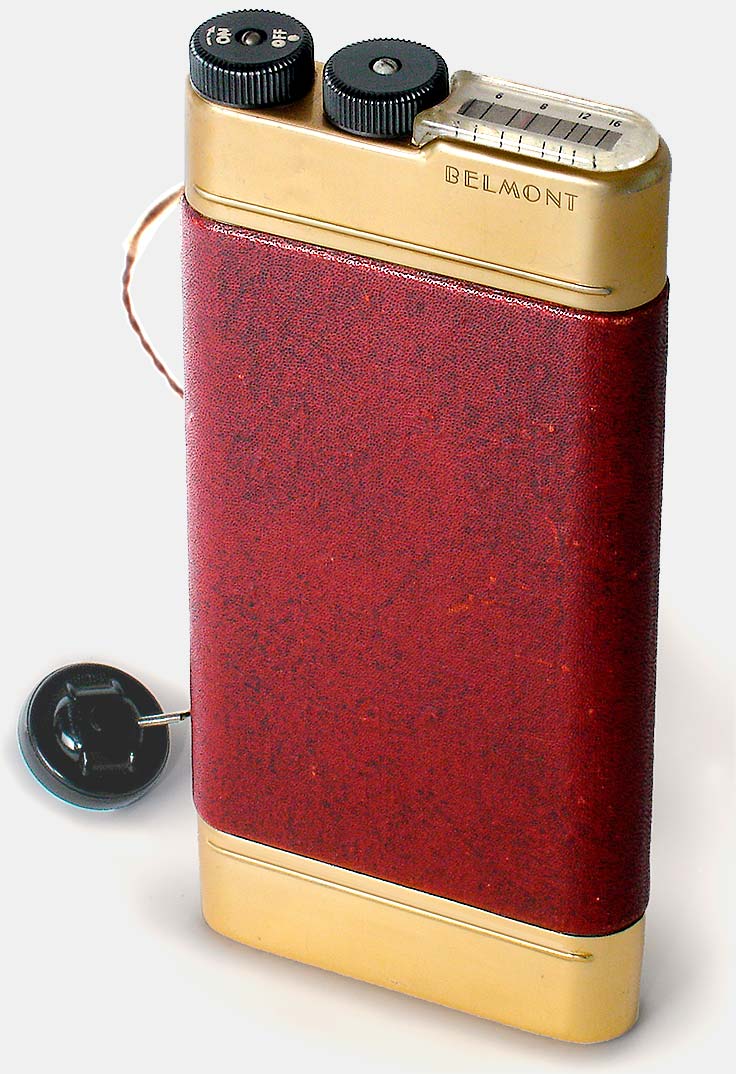
The small flat tube in the middle is called a “subminiature tube” and was designed by Raytheon for the military in World War II. Five such tubes are inside the first true pocket radio ever, shown here, the leather-clad 1947 Belmont Boulevard model 5P113.
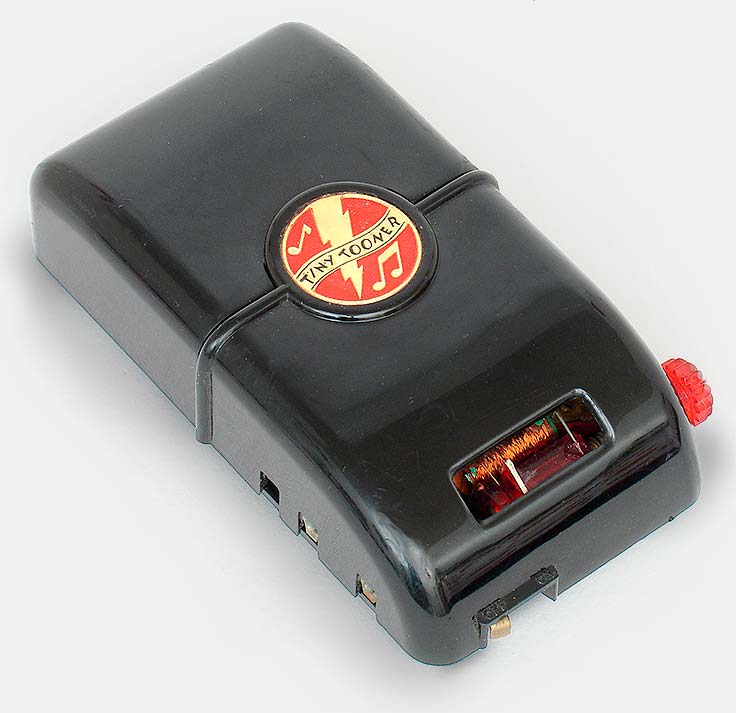
The Tiny Tooner pocket radio (c.1950, Acousticraft, Chicago, USA) measures just 4-1/4 inches long and has two subminiature tubes. Jacks on the side are for phones and antenna. Like the Belmont Boulevard, the Tiny Tooner could be heard with earphones only; there is no built-in speaker.
©Copyright 2008-2020 ericwrobbel.com. All rights reserved.