A Collection of Clocks
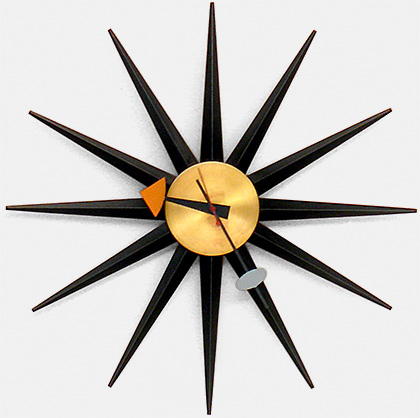
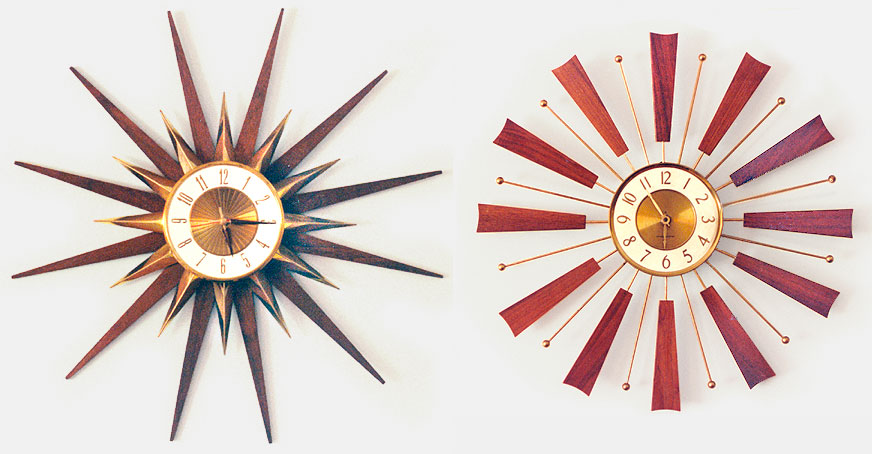
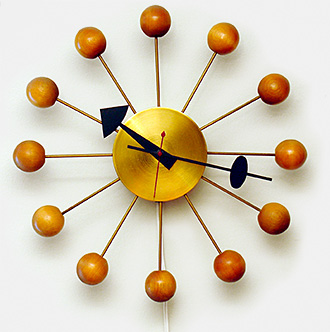
Two of my favorite clocks are the starburst, or spike, clock (c.1950s) seen here and the ball clock (1947). These are the real deal from Howard Miller Clock Co. (USA), design credited to George Nelson. These gorgeous clocks were knocked off (copied) dozens, maybe hundreds of times by lesser makers and you can see a couple of examples at the bottom of this page. Most of these rip-offs are truly hideous like the left one in that photo; some, like the right one, aren’t too bad. No one ever got close to equaling the design of the originals.
Historically, technology in the home has been hidden— house wiring and plumbing all out of sight, electrical outlets down behind chairs, TVs and stereos hidden in pieces of traditionally-styled furniture. My mother considers her video player such an affront to good taste that she has it on the floor behind a plant, for crying out loud. Clocks are the one bit of technology allowed out in plain sight—so I think that is the reason so many are so stylish.
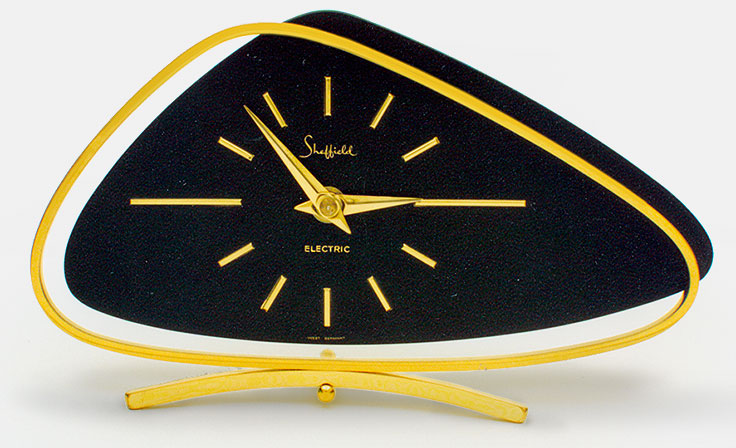
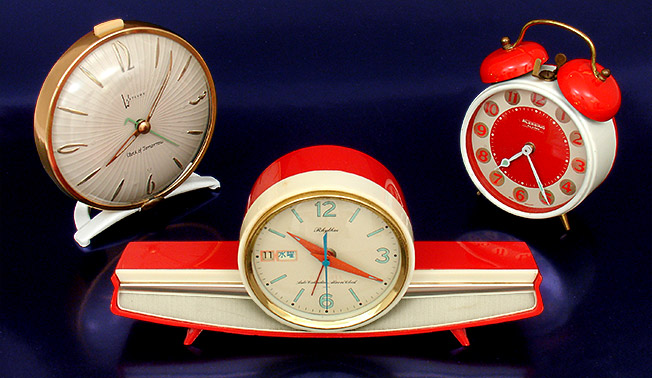
The beautiful black & gold Sheffield table clock is battery powered and from Germany c.1960s. In the photo of three more table clocks, at left is the wind-up Clock of Tomorrow by Westclox (1955, USA). Next is a delightful clock that reminds me of a 1950s Chevrolet emblem. It’s a wind-up Rhythm “Auto Calendar Alarm Clock” (c.1958, Japan). And at right is the fun Blessing wind-up alarm clock from West Germany, c.1960.
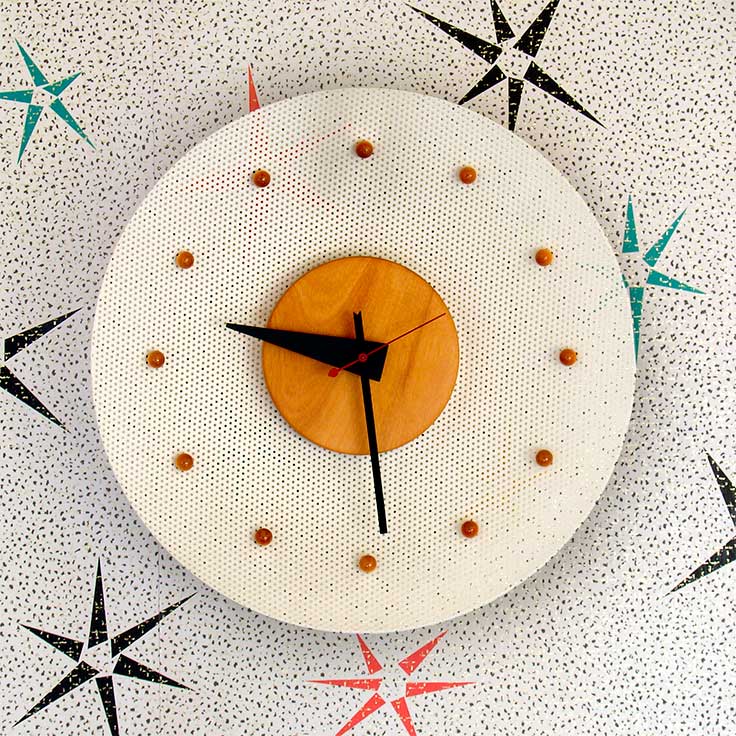
In my kitchen hangs another wonderful Howard Miller vintage clock, this perforated steel and wood number. It’s electric and measures 11-3/8 inches across.
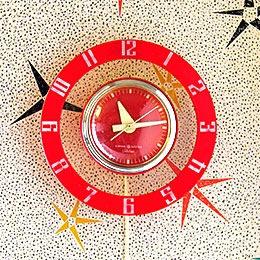
As huge a company as General Electric has been for many years, they’ve produced remarkably few stylish things. The red satellite GE Telechron electric kitchen clock shown here (c.1959) is definitely one of those stylish things.
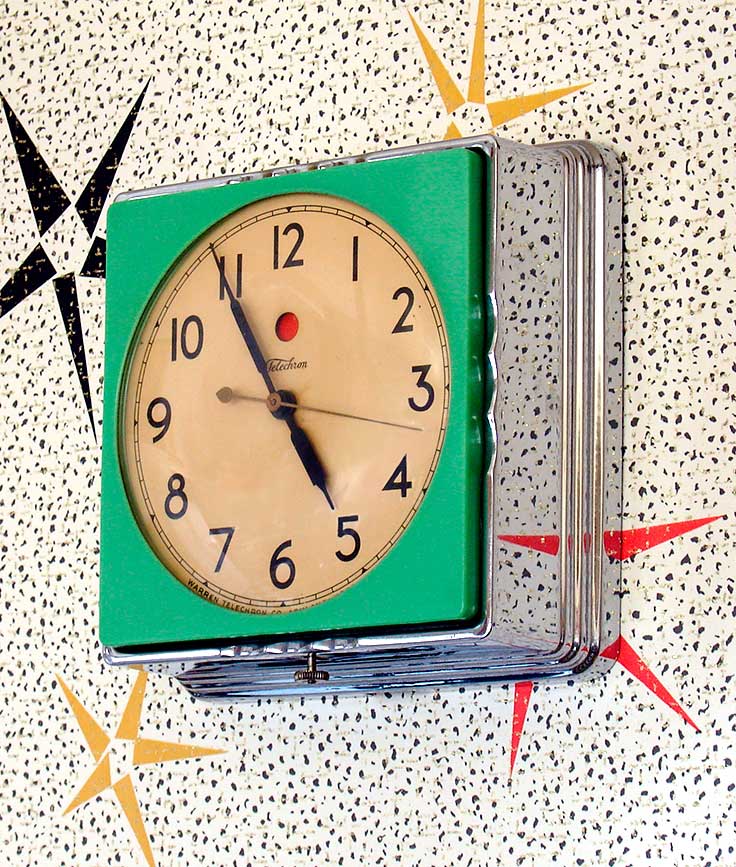
And below it is a green plastic and chrome metal Telechron kitchen clock from around 1940. This electric clock, marked Warren Telechron Co. (USA), predates GE’s takeover of that firm. It’s likely that the Telechron design people are responsible for the stylishly-designed GE clocks of the ’50s and ’60s, like the red one here, before GE management put a stop to it.
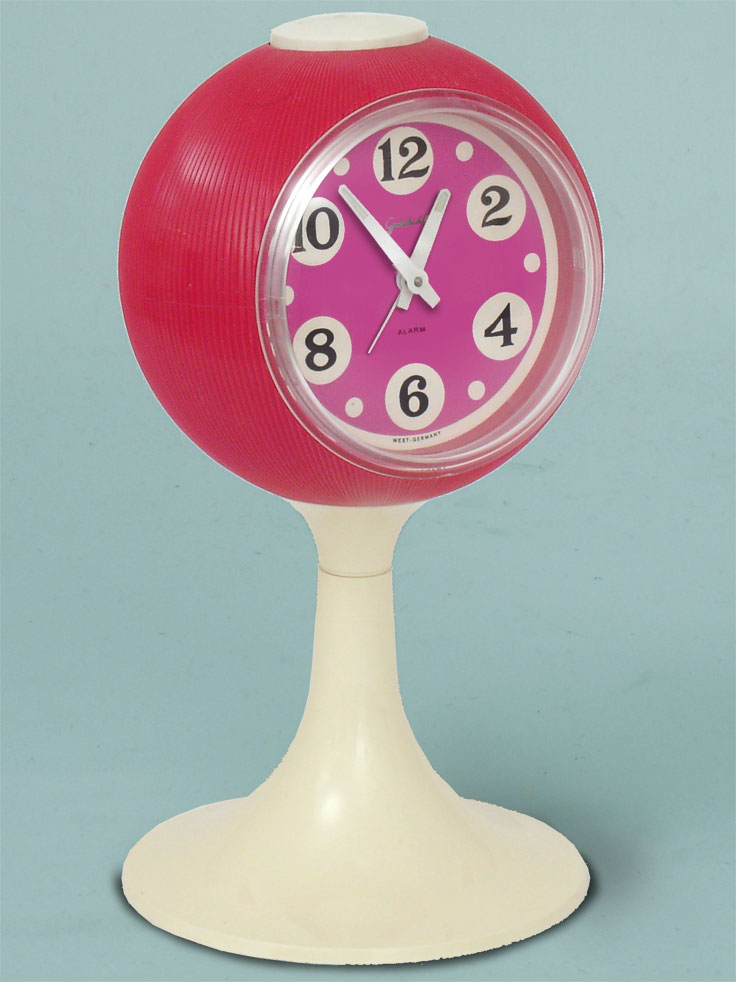
And in purple and white plastic proudly stands a Goldbühl wind-up alarm clock on a pedastal base (c.1967, West Germany). It’s about four inches across.
I don’t wear a watch. That’s the excuse I use for having so many clocks. Sometimes I’ll look to see what time it is and get to admiring the clock so much I forget to notice the time.